
Fiber Cement Siding
Installation in Los Angeles
James Hardie lap and panel siding over a new weather barrier and proper flashing, by our own crew: the material we install most, and the one that solves the sun, the termites and the fire-zone rules at once.
Professional, licensed & insured Fixed-price proposals Permits pulled & closed Our own crew, not subs
Tell us about the project. We call back to schedule the on-site estimate.
Fiber cement siding in Los Angeles: Right Image Builders (CSLB #1021284) installs James Hardie and similar fiber cement lap, panel and board-and-batten siding with its own crew — tear-off, dry-rot repair, new weather-resistive barrier, flashing at every opening, siding and trim, ready for paint. Noncombustible, so it meets the wildland-urban interface rules in the hillside and canyon fire zones; 10-year written workmanship warranty.
Licensed general contractor, CSLB #1021284, licensed since 2016, 5.0★ Google (45 reviews), 4.9★ Angi (103 reviews). Planning ranges by tier and neighborhood are in the siding cost guide.
Right Image Builders installs fiber cement siding across Los Angeles, from 1950s Valley ranches converting from failed stucco or wood to hillside houses in Calabasas and the canyons that need a noncombustible exterior. Our crew does the tear-off, the dry-rot repair, the weather-resistive barrier and flashing, the siding and the trim, and pulls the LADBS or city permit. 10-year written workmanship warranty. Free on-site estimate: (818) 210-4544.
Why Fiber Cement Wins
in the Los Angeles Climate
Fiber cement is cement, sand and cellulose fiber pressed into boards that look like wood lap, shingles or vertical panels. It does not burn, termites do not eat it, the Valley sun does not dry it out the way it dries wood, and it holds paint far longer than wood because it does not move with humidity. For a Los Angeles house that is why it has become the default replacement material.
What it needs is a crew that treats it as a water-management system rather than a surface: a new weather-resistive barrier lapped correctly, flashing at every window, door, deck ledger and corner, the right gap and sealant at the butt joints, and nails set to the manufacturer's schedule. Done that way, the product's long warranty means something; done over an old torn barrier, no siding lasts.
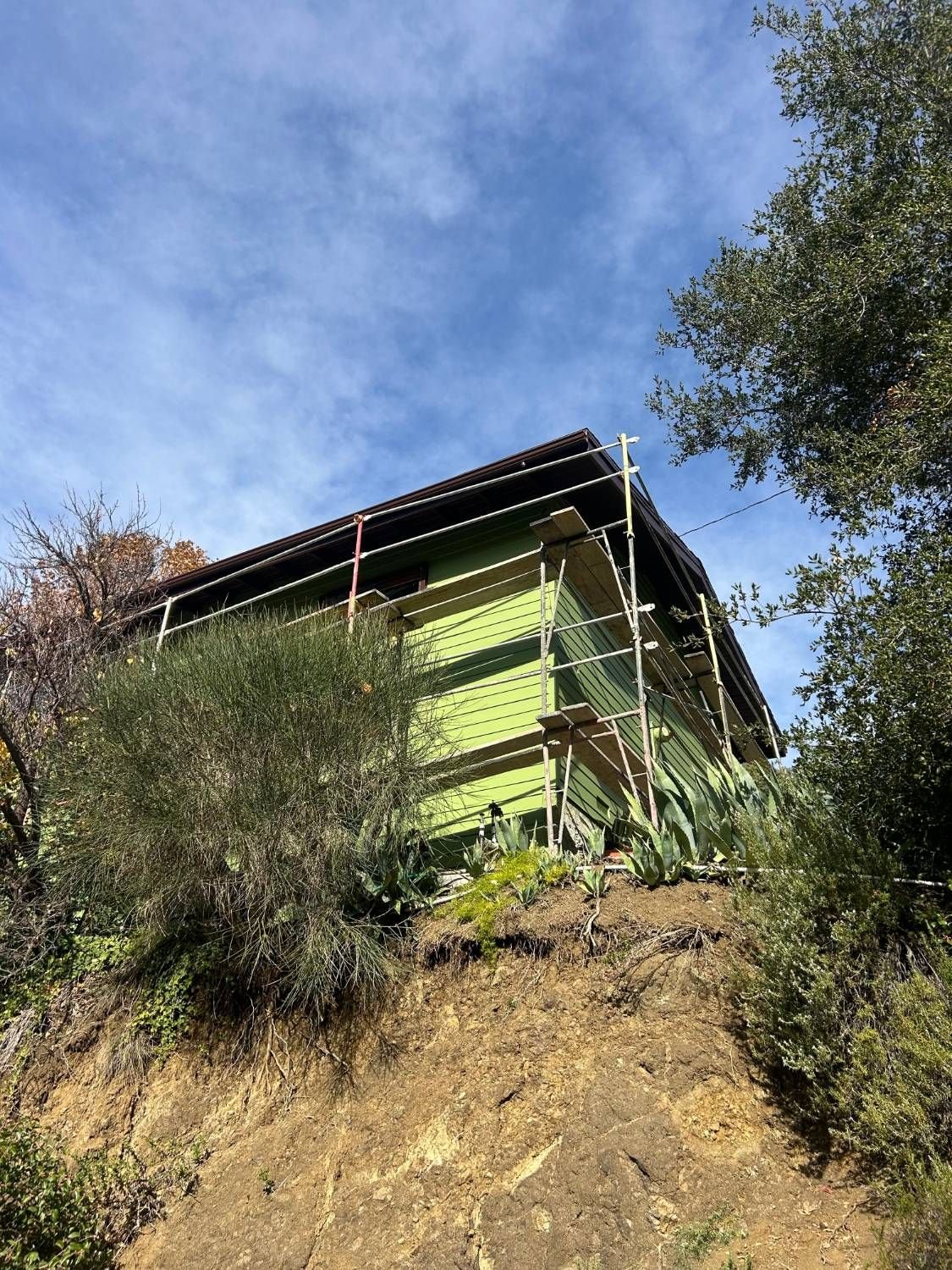
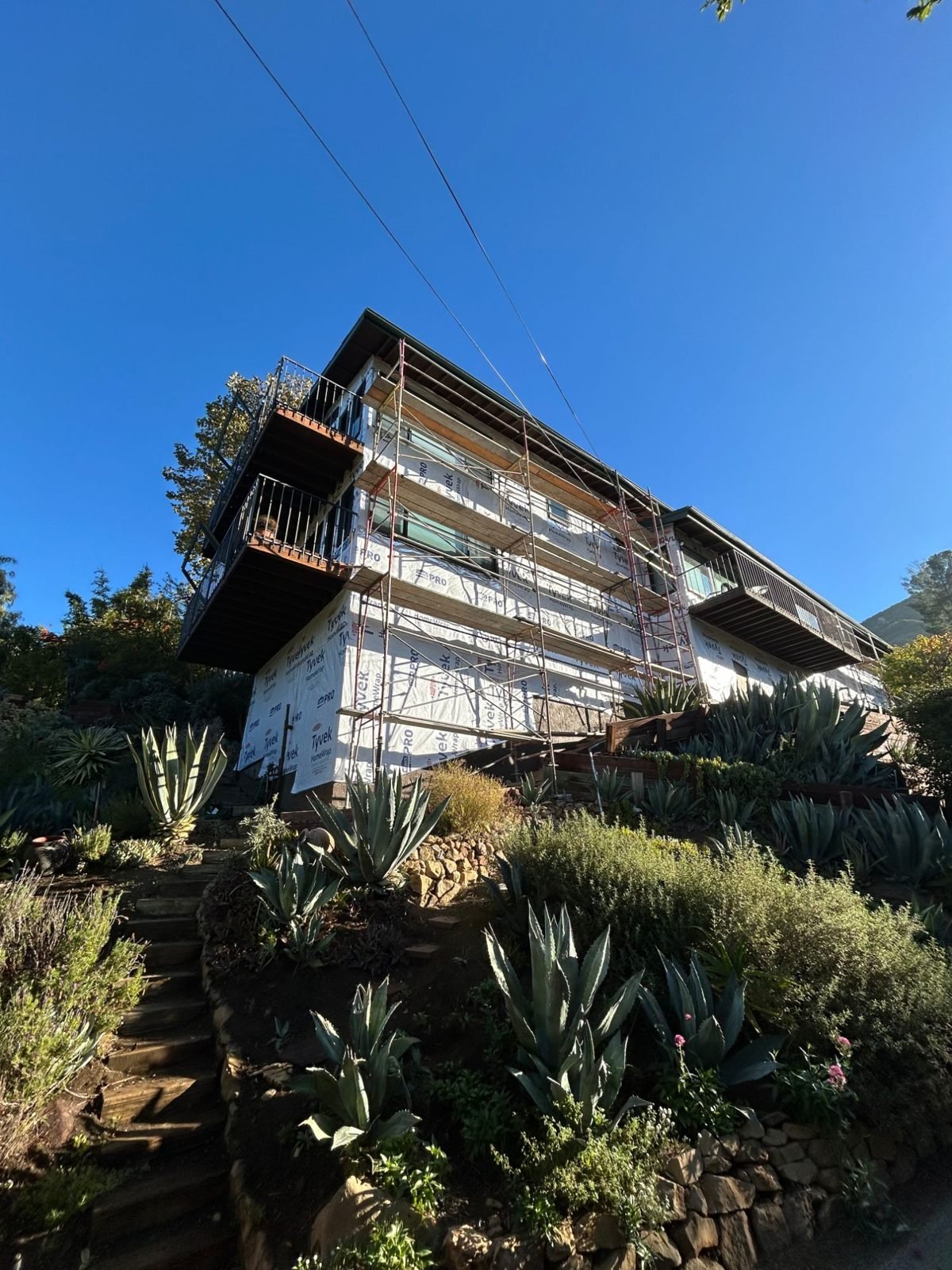
In Very High Fire Hazard Severity Zones, fiber cement qualifies as a noncombustible exterior under the California Wildland-Urban Interface Code that replaced Chapter 7A on January 1, 2026, which is why we recommended it on the Calabasas hillside project shown on these pages.
Lap, Panel, Shingle:
What Fits the House
Lap siding (HardiePlank type)
Horizontal boards with a 5- to 8-inch exposure, smooth or wood-grain; the choice for ranches, Craftsman and traditional houses.
Vertical panel and board-and-batten
Full-height panels with battens for mid-century, farmhouse and modern elevations; more cutting and trim, hence the higher range.
Shingle and shake panels
Fiber cement shingle panels for gables and accent walls where the house had wood shakes, which fire zones no longer allow untreated.
Trim and corners
Fiber cement or engineered trim boards at corners, windows and frieze, flashed and gapped so paint and sealant last.
Colors
Factory-finished boards with the manufacturer's finish warranty, or primed boards painted on site in any color.
Stucco-to-fiber-cement conversions
Stucco removed to the sheathing, repairs made, new barrier and siding; a common upgrade on 1950s houses whose stucco has failed to the lath.
Transparent from the first visit to the closed permit.
Professional, licensed and insured, and we put that in writing at every step, because a remodel is a trust decision before it is a construction decision.
California general contractor license CSLB #1021284 (General Building B), active since 2016, with general liability and workers' compensation insurance. Check the license yourself at cslb.ca.gov before you sign anything, with us or anyone else.
The proposal lists what is demolished, what is built, which finishes are included and which permit covers it. If it is not written down, it is not in the job.
When walls, floors or roofs open up we photograph what is behind them and send you the pictures. Anything beyond the scope is priced in writing before the crew continues. You never find out from the invoice.
California law caps a home-improvement deposit at $1,000 or 10 percent of the contract, whichever is less. We follow it. Progress payments follow the work, and the final payment comes after your walkthrough.
We submit the plans, meet the inspector and close the permit. You get the closed-permit record, which is what a buyer, an insurer or an appraiser will ask for.
The people who estimate the job are the people who build it. No subcontractor hand-offs, no call center; your project lead answers the phone during the job and after it.
One Fixed Price,
Written Before We Start
Right Image Builders prices a siding replacement in Los Angeles the same way every time: a free on-site visit, a measured scope, the LADBS requirements checked for your address, and an itemized fixed price in writing within a few business days.
Hidden conditions are priced in writing when they are found, not on the final invoice; the number you sign is the number you pay, and the final payment follows your walkthrough.
For planning ranges before the visit, see the siding cost guide.
Three Steps.
Zero Surprises.
Free Exterior Assessment
We walk every elevation, probe for rot and check the barrier, flashing and weep screed, and tell you honestly what the wall needs.
Fixed-Price Proposal
An itemized fixed price by elevation and material within 3–5 business days; hidden rot found at tear-off is priced in writing before the crew continues.
Install, Inspect, Warrant
Our own crew, a closed permit, and a 10-year written workmanship warranty at completion.
Get a Fiber Cement
Estimate
Tell us about the house and what you are seeing on the walls; a senior member of our team will reach out within 4 business hours.
Prefer to talk it through?
Read before you hire anyone.
Plain answers on costs, permits, materials and hiring, written for Los Angeles houses and kept current.
Siding in a Fire Zone: Fiber Cement, Stucco, Treated Wood or Vinyl?
Re-siding in a Los Angeles fire zone? What the 2026 Wildland-Urban Interface Code allows: fiber cement, stucco,…
Read the guide →Decision guideJames Hardie, LP SmartSide or Vinyl: Which Siding for a Los Angeles House?
James Hardie, LP SmartSide or vinyl siding in Los Angeles?
Read the guide →Decision guideRe-Stucco or Re-Side? The 1950s Valley House Decision
Re-coat, re-stucco or convert a 1950s Valley stucco house to fiber cement?
Read the guide →AnswersSiding and stucco questions
Direct answers from the Los Angeles remodeling FAQ, kept current.
Read the answers →Questions We
Hear Every Week
Yes. Fiber cement is a noncombustible exterior wall covering under the 2025 California Wildland-Urban Interface Code, which applies to re-siding in Very High Fire Hazard Severity Zones from January 1, 2026. It is the most common way to bring a wood-sided hillside house into compliance.
Manufacturers warrant the boards for decades, with factory finishes carrying their own shorter finish warranties; in practice the siding outlasts its paint, which is refreshed every 10–15 years. The weather barrier and flashing behind it decide whether the wall lasts as long as the boards, which is why we replace both.
No. We install James Hardie and similar fiber cement products to the manufacturer's published instructions with our own crew, and we stand behind the installation with a 10-year written workmanship warranty; we do not claim a manufacturer certification or program tier.
Not over it. Stucco is removed to the sheathing, the wall is repaired, a new weather-resistive barrier and flashing go on, and the siding is installed on a flat, sound substrate. Siding over stucco traps moisture and voids the product warranty.
A full replacement runs 2–4 weeks on site for a typical house; the boards themselves go up in days once the tear-off, repairs and barrier are done. Hillside houses add scaffolding time; the Calabasas project ran six weeks on three levels with rot repairs.
With one fixed, written price after a free on-site visit. We measure the house, confirm what LADBS will require for your address, and itemize the whole scope before you sign; anything uncovered during the work in Los Angeles is priced in writing before the crew continues, and the final payment comes after your walkthrough. Planning ranges are published in the siding cost guide.
Siding Replacement
Every material, 2026 cost ranges →
ProjectCalabasas Fiber Cement Siding
Hillside tear-off to finished Hardie lap →
MaterialStucco
The other Los Angeles exterior →
GuideStucco vs. Fiber Cement vs. Wood
Which material for which house →
GuideSiding in a Fire Zone
The WUI code, material by material →
ServiceSiding and Stucco Repair
When a repair is enough →
GuideRe-Stucco or Re-Side?
The 1950s Valley house decision →
GuideHardie vs. SmartSide vs. Vinyl
Which product for your house →